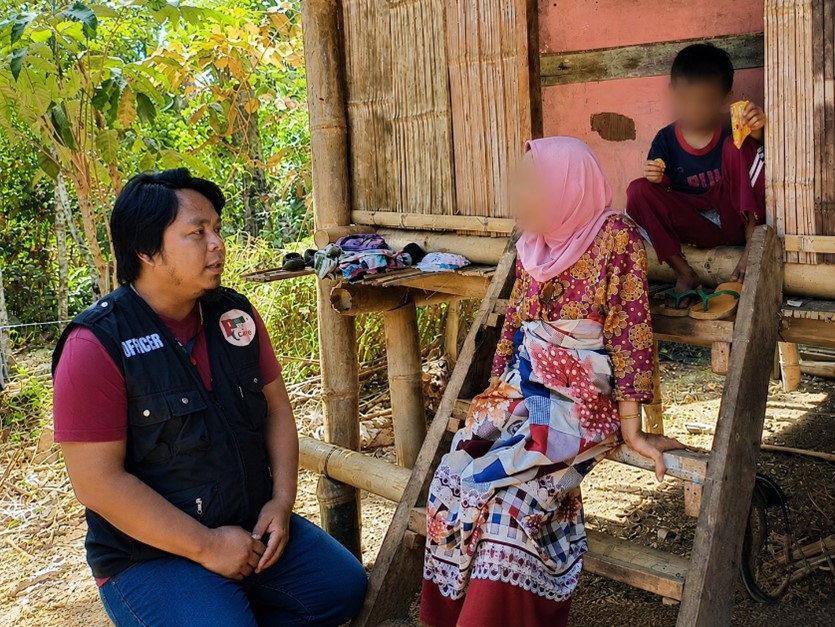
In Bacolod-Kalawi, Lanao del Sur, one family is doing what it can to sustain itself with the limited livelihood opportunities available around them. During a field visit, a PHILCARE team met the family at their home and listened to their experience - their daily work, their sources of income, and the challenges they face in providing for their household.
Making a Living from Cassava
Part of the family's livelihood comes from the land. They grow cassava, which they sell after harvesting. They also turn some of what they grow into cassava cake, creating another way to earn from the same crop.
“Our source of livelihood is planting cassava. After harvesting, we sell it, and we also make cassava cake from it.”
But cassava farming alone is not enough to meet the household's needs. With limited livelihood opportunities available, family members find other ways to earn. Some engage in breaking stones, while others collect tree branches and wood to sell.
Together, these different activities help the household meet its daily needs. They are not necessarily stable sources of income, but they reflect how the family uses the work and resources available to them to keep moving forward.
A Family Working Together
The field visit also provided a closer look at the family's living conditions and the people who depend on the household. The mother lives with her children and grandchildren, while another grandchild lives elsewhere.
Despite the challenges they face, members of the family continue to contribute in different ways - planting and harvesting cassava, preparing cassava products, collecting wood, and undertaking physically demanding work.
Behind that determination, however, is a household with limited resources and few livelihood options. Their ability to work does not necessarily translate into stable or sufficient income.
“If no one shows mercy to us, we have none.”
Looking Beyond Immediate Need
For PHILCARE, field visits like this are an opportunity to listen before acting - to understand not only what a family needs, but also what they are already capable of doing.
This family's story is not only about hardship. They already possess knowledge of farming, experience in cassava production and processing, a willingness to work, and a household in which family members contribute in different ways.
These existing capacities matter. Rather than viewing the household only through what it lacks, its experience points toward a different question: What could become possible if a family already working this hard had access to safer, more reliable, and sustainable livelihood opportunities?
Building From Existing Strengths
The answer may not lie simply in short-term assistance. Understanding the family's existing skills and livelihood activities can help inform future approaches that strengthen what they already know and do.
For this family in Bacolod-Kalawi, cassava farming, food production, and daily labor are more than ways of earning an income. They represent persistence - the effort to make the most of what is available and continue providing for one another.
Their story reminds us that meaningful humanitarian and development work begins not only by identifying needs, but also by recognizing people's capacities, listening to their priorities, and building from the strengths they already possess.
“What could become possible if a family already working this hard had access to safer, more reliable, and sustainable livelihood opportunities?”