
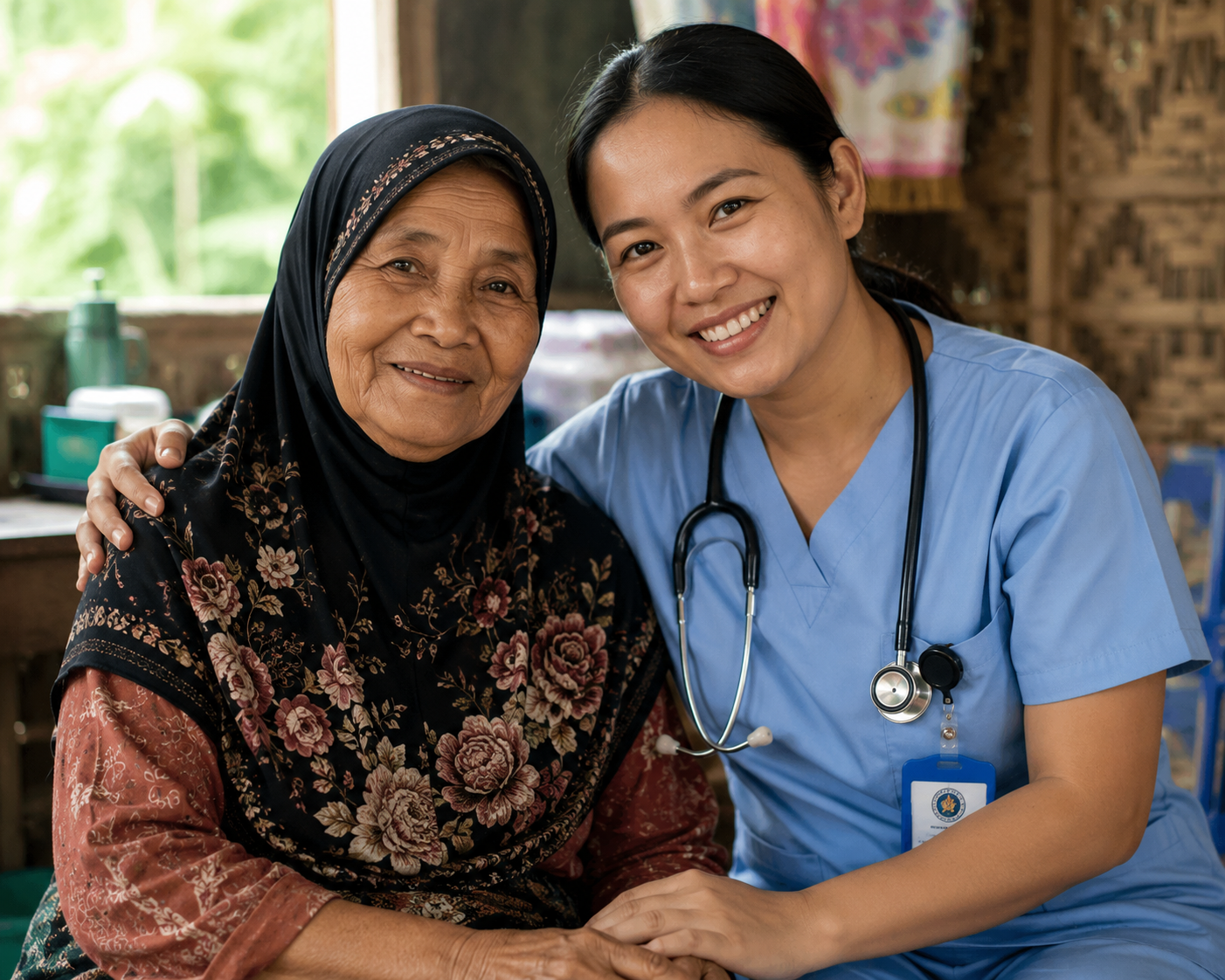
Lola Farida is eighty-one and has outlived two husbands, four barangay captains, and — by her count — every diet a doctor has ever put her on. She still refuses to skip her Tuesday visit.
The visit is not a checkup in the clinical sense. It is thirty minutes on the porch, a blood pressure cuff, and a conversation that circles back, eventually, to whether she has been taking her medication. The nurse who makes the visit, Jenny, has been doing this route for six years.
“Campaigns end. Somebody has to keep showing up on Tuesday.”
Home visits are not PhilCare's most visible work. There is no ribbon-cutting, no single dramatic before-and-after. What they are is consistent — a form of care measured in the number of Tuesdays kept, not the size of an event.
Why continuity is the program
For elderly residents managing chronic conditions in areas without a permanent clinic, the relationship with a single, returning health worker often matters more than any one intervention. Lola Farida's blood pressure has been stable for eleven months. She credits Jenny. Jenny credits Lola Farida's stubbornness about the medication schedule. Both are probably right.
Placeholder narrative — replace with the editorially verified, consent-cleared story.