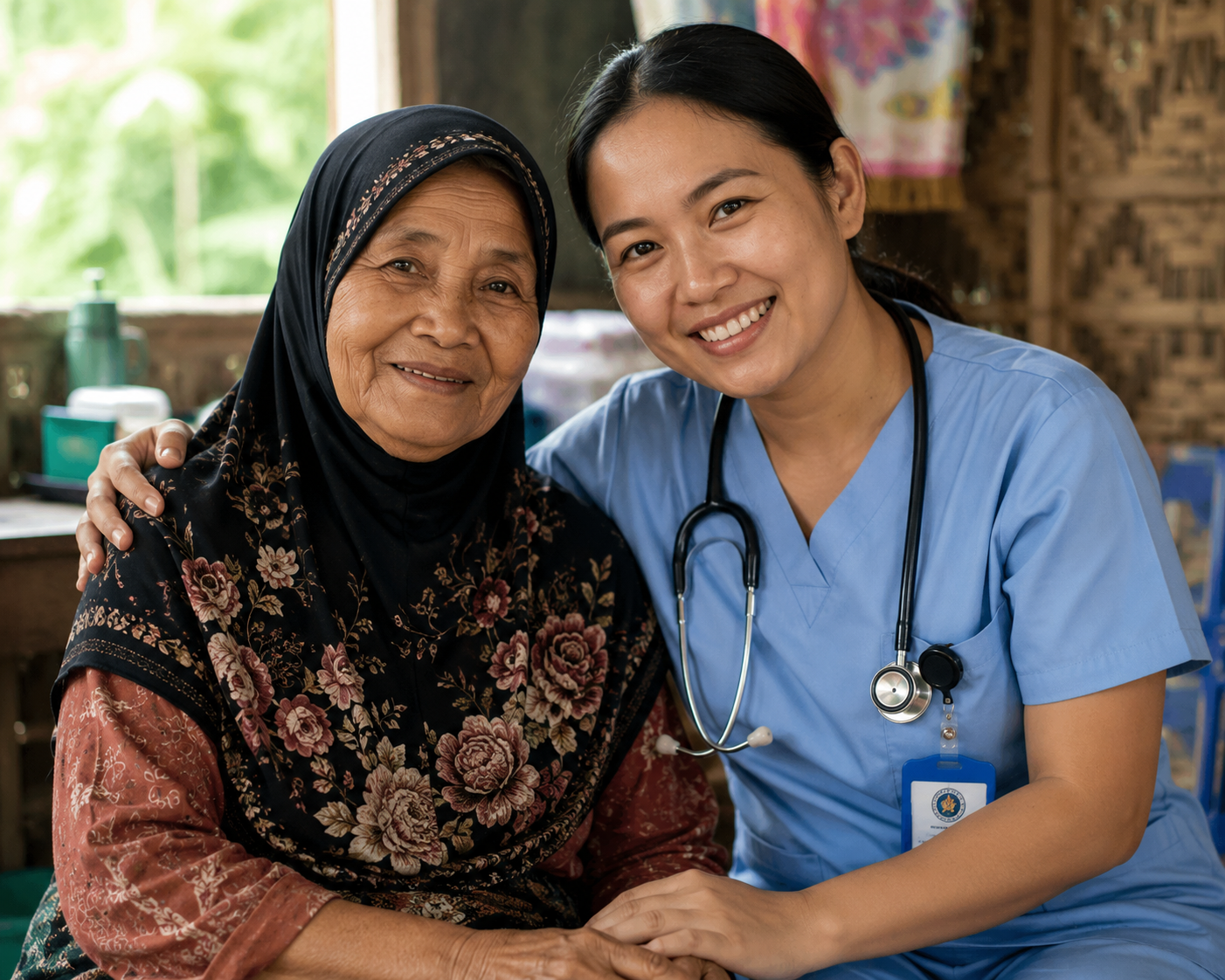

Nanay Amina leaves her house at four in the morning, before the roosters, carrying a bag that has not changed in fifteen years: gloves, a fetal doppler, a stack of prenatal cards, and a flashlight for the last hour of water that the sun has not yet reached.
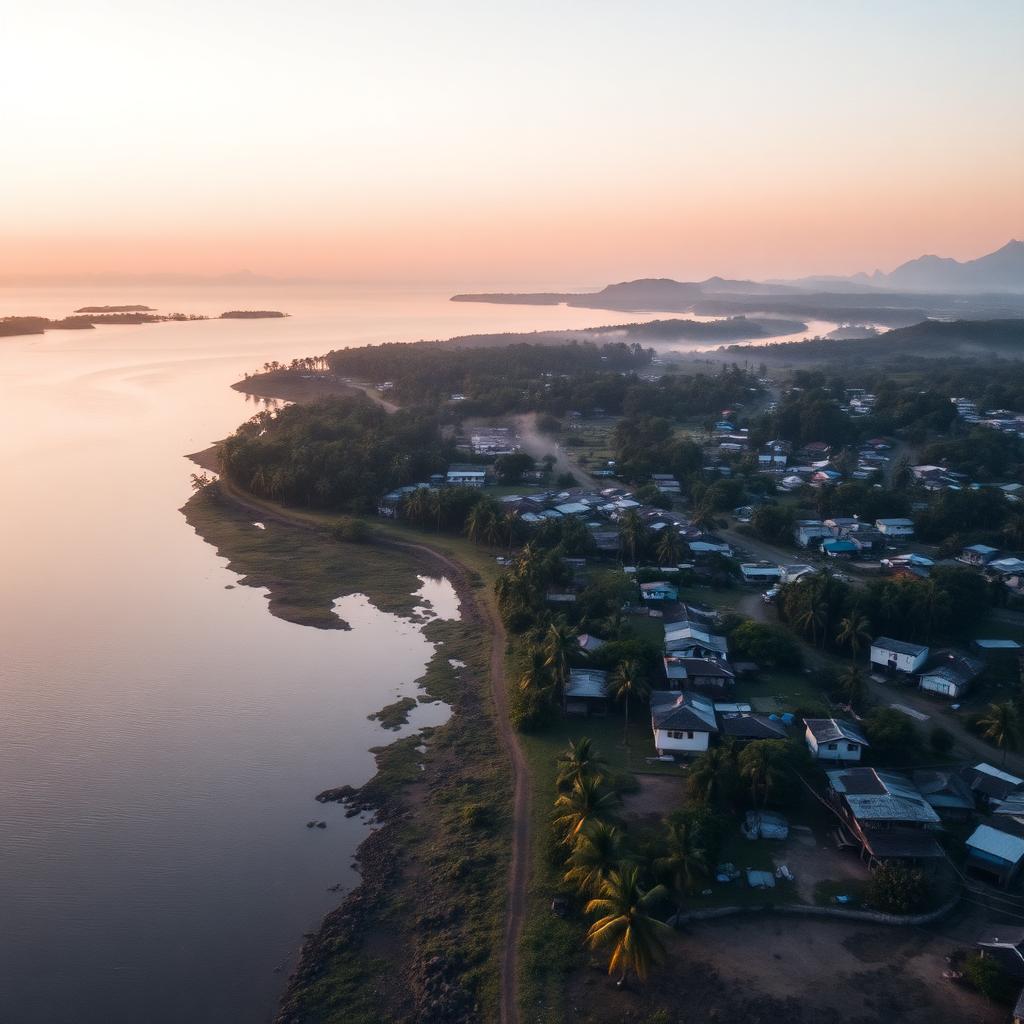
The trip to the farthest barangay under her care takes just under an hour by boat across Lake Lanao on a good day — longer when the water turns rough, and impossible for a week or more during the worst of the rainy season. There is no bridge. There is no road that reaches some of these shorelines at all. There is only the boat, and Nanay Amina has made the crossing for over two decades.
A clinic that arrives by water
Before PhilCare's mobile health circuit reached this stretch of Lanao del Sur, Nanay Amina's rounds were the only regular healthcare most families here saw. The circuit did not replace her work — it built around it, training her as a certified community health worker and giving her a fixed monthly date when a doctor and midwife would cross the lake alongside her.
“You do not wait for people to come to the clinic. You bring the clinic to where the people already are.”
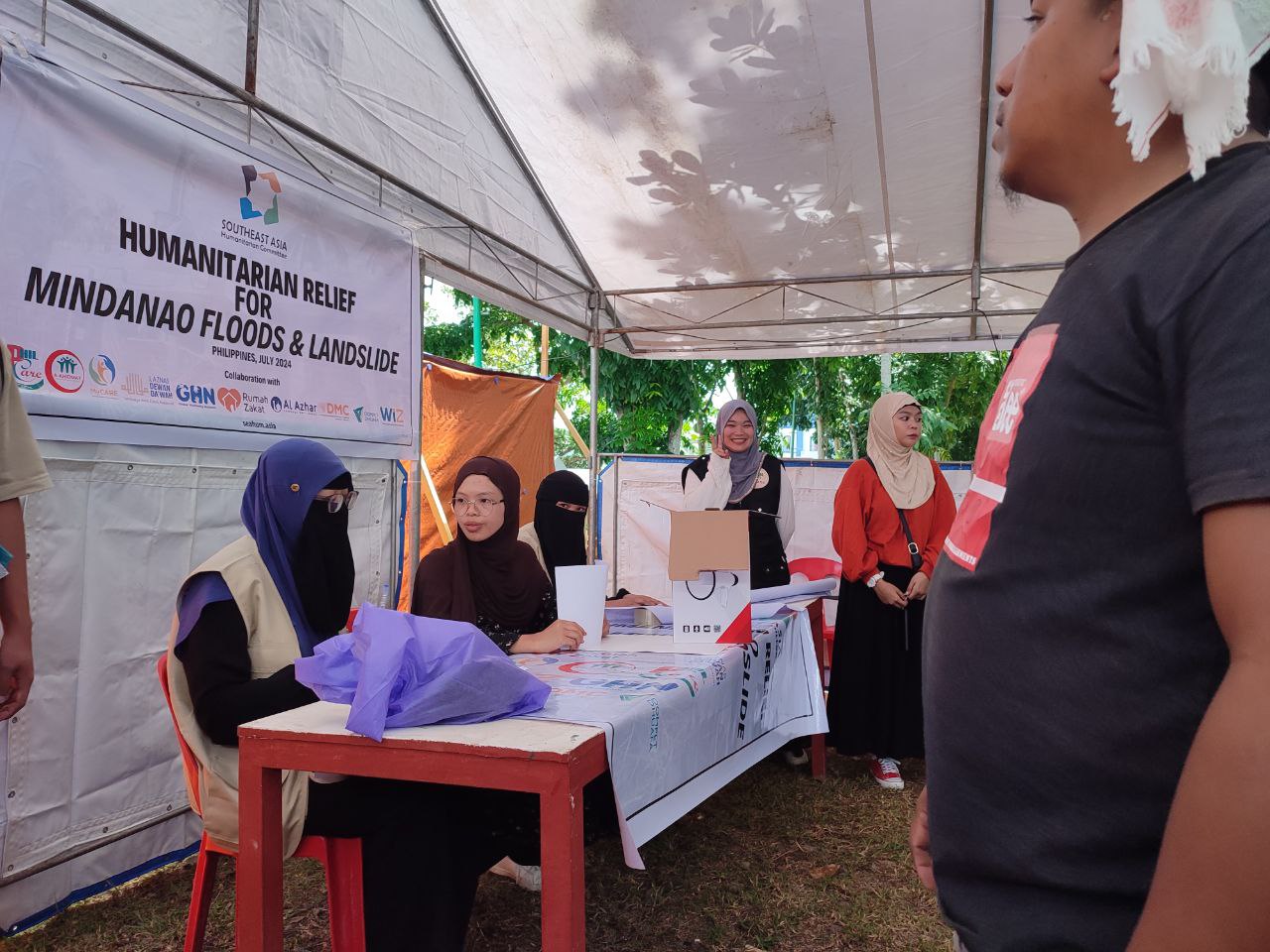
On clinic days, the barangay hall becomes a waiting room. Mothers bring children still in sleep clothes. An elderly farmer waits with a blood pressure concern he has been sitting on for months. Nanay Amina triages before the team even arrives — she has known most of these families her whole life.
What stays after the visit
The clinic team leaves by early afternoon, back across the lake before the wind picks up. What stays is Nanay Amina — restocked, retrained, and reachable by the radio PhilCare provided for emergencies between visits. It is a model built on the assumption that she was never the gap to fill. She was the foundation to build on.
Placeholder narrative — replace with the editorially verified, consent-cleared story.